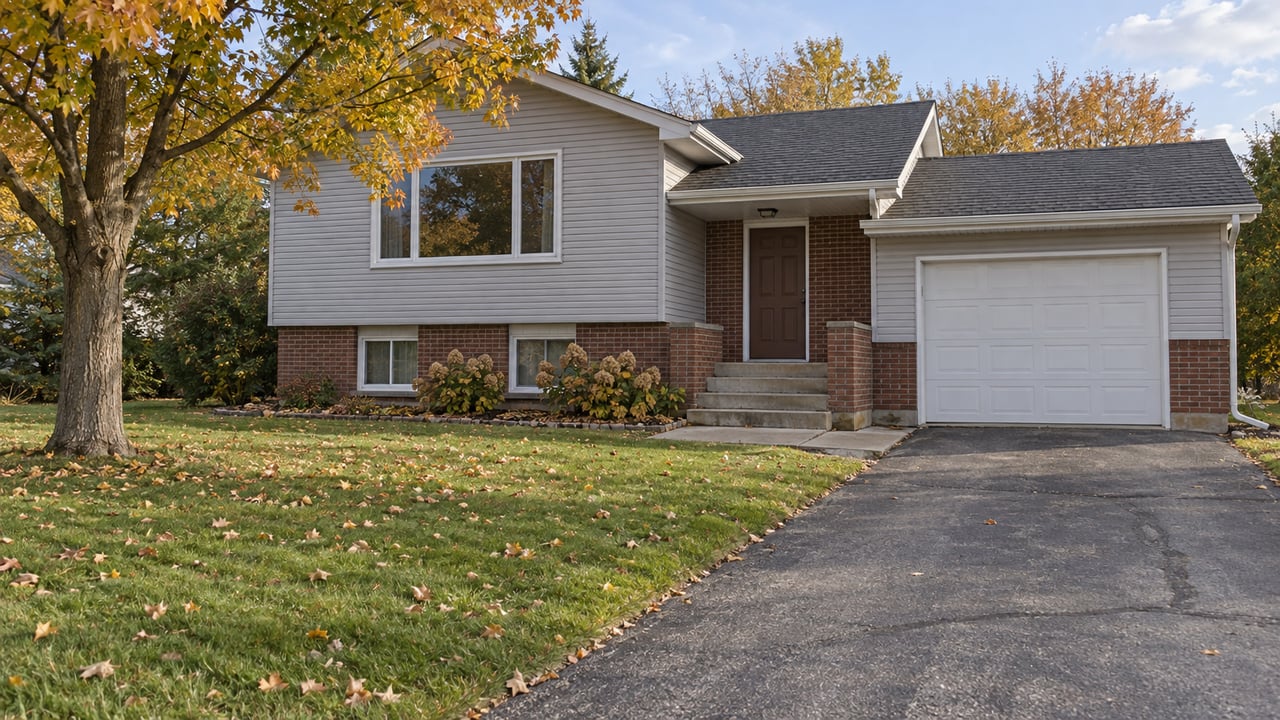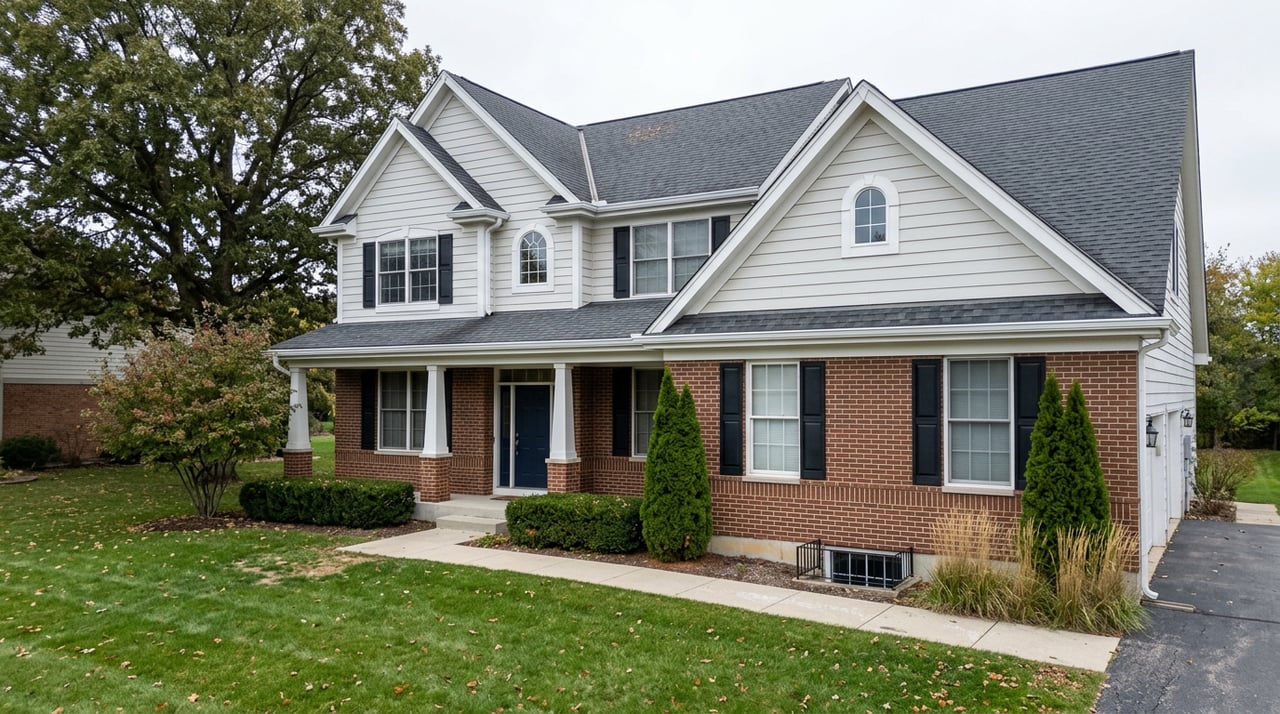
A basement in a five-year-old Eau Claire home tested at 9.2 picocuries per liter last winter. Not a fixer-upper. Not a home with a cracked foundation or a musty crawlspace. A newer build, the kind buyers assume they can skip the radon conversation on because everything else is up to code. The number came back more than double the EPA's action level of 4.0 pCi/L, and the mitigation contractor who installed the fix later noted the retest landed at 1.1, proof the fix worked, but also proof the original assumption did not.
That gap between what people expect and what the report says is the real story behind radon in this market, and it matters more to a transaction than most buyers or sellers realize going in.
The Number on the Health Department's Website Isn't the Number on Your Inspection Report
Ask the Wisconsin Department of Health Services how common high radon is, and the answer has stayed consistent for years: about 1 in 10 homes statewide test above the EPA's guideline. In January 2026, Elizabeth Paulson, an environmental health specialist with the Eau Claire City-County Health Department, told local media the rate here tracks close to that same statewide figure. Winter is when levels peak, she explained, because homes are sealed tight and pressure differences pull more soil gas indoors.
That's the official number. It is not the number local inspectors see.
A Plus Inspection Specialists, which tests homes across Eau Claire, Chippewa Falls, and the surrounding area, reports that roughly 70 percent of the homes they've tested come back above 4.0 pCi/L. County-radon.info, which aggregates submitted test results, puts the average indoor reading for Eau Claire County at 4.8 pCi/L, already above the action threshold before you even factor in the homes that test higher. Neither of these numbers is wrong. They're just measuring a different population than the state's headline statistic.
| Source | Elevated-radon rate reported | What's actually being counted |
|---|---|---|
| Wisconsin DHS (statewide) | About 1 in 10 homes | All homes statewide, most never individually tested |
| Eau Claire City-County Health Dept. (Jan. 2026) | Described as similar to the statewide rate | A broad local estimate, not transaction-specific data |
| A Plus Inspection Specialists | About 70% of homes tested | Homes actually tested, largely during real estate transactions |
| Eau Claire County (aggregated results) | County average of 4.8 pCi/L | Submitted test results, skewed toward homes already flagged for testing |
The state's 1-in-10 figure is an extrapolation across every home in Wisconsin, including the majority that will never see a radon canister in their basement. The inspectors' numbers come from a much narrower, self-selecting group: homes that are actually being bought or sold. If you're one of the people in that second group, the statewide number tells you almost nothing about what your own report is likely to show.
Why Eau Claire's Housing Stock Makes This the Default, Not the Exception
Part of the answer is geology. Eau Claire, Chippewa, and Dunn counties all sit in EPA Radon Zone 1, the federal government's highest-risk category for indoor radon potential. That designation applies to homes of every age and price point, which is exactly why the mitigation industry here will tell you a newer home is no safer bet than an older one. Tighter building envelopes trap soil gas just as effectively as loose old ones, sometimes more so.
But zone designation alone doesn't explain why local testing rates run so far above the state average. The other half of the answer is what's actually getting tested. The median home in Eau Claire was built in 1975, according to Census-derived housing data, and older city planning research found that 82 percent of Eau Claire's housing predates 1980. Homes from that era were built with the basement layouts and foundation styles that give soil gas the clearest path indoors: poured or block foundations, sump pits, exposed floor drains, decades of small cracks that never got addressed because nobody was looking for them.
Put those two facts together. A market where most homes are old enough to have foundation-level entry points for radon, sitting in a zone the EPA already flags as highest-risk, and where the only homes getting individually tested are the ones changing hands. That's not a coincidence producing a 70 percent hit rate. That's the exact population most likely to test high, measured by the people who actually measure it.
What This Looks Like Inside an Actual Contract
Wisconsin does not require a radon test as part of a home sale. The DHS is explicit on this point: testing isn't mandated, but it's strongly recommended, and the department specifically encourages real estate agents to raise it with clients rather than leave it as an afterthought.
In practice, most local inspectors don't leave it as an afterthought either. Firms like RC Home Inspections, Wisconsin Building Inspectors, Chippewa Valley Home Inspections, and Arrow Inspection Services all build radon testing into their standard inspection process, usually at a discounted add-on rate when scheduled alongside the full inspection. The test itself is simple: a continuous monitor sits in the basement or lowest livable level for 48 to 96 hours, and the report is typically formatted specifically for a buyer's agent working inside an inspection contingency deadline. Same-week appointments are the norm, and companies serving this market can usually slot in a test within 24 to 48 hours when a contract clock is running.
If the result comes back elevated, the fix is well understood and consistent across the region. Active sub-slab depressurization is the standard approach here: a contractor cores a small hole through the basement slab, routes a PVC pipe to an exterior-mounted fan, and vents the discharge above the roofline and away from windows. A U-tube manometer gets mounted on the visible portion of the pipe so the homeowner can check at a glance that the fan is still pulling. A short-term retest 24 to 48 hours after the fan is energized confirms the home has dropped below 4.0 pCi/L. Chippewa Valley Radon says mitigation fans typically carry a five-year manufacturer warranty, with local installers backing their workmanship for one to two years.
Where the Negotiation Actually Happens
Because the test isn't required by law, radon becomes a line item that gets negotiated rather than assumed. A seller who tests before listing and discloses the result upfront removes a variable that could otherwise stall negotiations mid-contract. A buyer who waits until the inspection period to request a test is working within a tighter window, though local companies built their turnaround times around exactly that scenario.
Timing matters in a way that catches people off guard. Paulson's point about winter conditions isn't just a public health tip, it's a transaction detail. A home that tests during a mild summer showing may read lower than it would in January, when doors and windows stay shut and pressure differences pull more gas indoors. Wisconsin's own health guidance recommends retesting every two years or after any major remodeling, which is worth remembering if you're buying a home that was tested once, years ago, and never again.
None of this makes radon a dealbreaker. It makes it a known, budgetable step, provided everyone in the transaction understands it's likely to come up rather than being surprised when it does.
Frequently Asked Questions
Is radon testing required to sell a home in Wisconsin? No. State law does not require it, though the Department of Health Services recommends every home be tested and encourages real estate professionals to discuss it with clients during a transaction.
Does a newer home mean a lower radon risk? Not necessarily. Local mitigation companies report that newer construction can test as high as, or higher than, older homes, since tighter building envelopes trap soil gas rather than letting it dissipate.
How long does mitigation take once elevated levels are confirmed? Installation itself is typically a single visit. Companies serving this market advertise same-week appointments, and the confirming retest after the fan is installed and running takes only 24 to 48 hours.
If you're weighing a purchase or a listing in Eau Claire and want to understand how radon, inspection timing, and negotiation fit together before you're mid-contract, Luxe Realty can walk through what to expect for your specific property. Reach out to schedule a consultation or request a free home valuation, and get answers before the inspection clock starts running.
This article is general information, not legal, tax or financial advice. Consult a qualified professional about your situation.