If you picture riverfront living as a row of isolated luxury homes, Eau Claire may surprise you. Here, life near the water is more connected, more walkable, and more woven into everyday city living. If you are thinking about buying near the river, it helps to understand what that lifestyle really looks like, what kinds of homes you will find, and what practical tradeoffs come with the view. Let’s dive in.
Eau Claire's riverfront feel
Eau Claire’s riverfront identity starts at the meeting point of the Chippewa and Eau Claire Rivers. City planning documents describe that confluence as the city’s most dominant geographic feature, and the rivers are visible from many neighborhoods and parts of the city.
That visibility shapes how the city feels. Downtown and several nearby neighborhoods are oriented toward the water, with wooded bluffs framing parts of the Chippewa River corridor north and south of downtown. In the core, riverfront projects like Haymarket Plaza and the Riverwalk Trail show just how much Eau Claire has embraced the rivers as part of daily life.
Riverfront living is not one thing
One of the biggest things to know is that riverfront living in Eau Claire is not a single housing style or one continuous waterfront strip. It is better understood as a collection of connected districts and older neighborhoods near the rivers.
That means your options may include older single-family homes, duplexes, rental conversions, small multifamily buildings, and mixed-use downtown settings. If you are expecting a suburban waterfront-estate model, Eau Claire usually offers something different: scenery paired with city convenience.
North River Fronts offers close river access
North River Fronts is one of the clearest examples of a river-adjacent residential area in Eau Claire. The city describes it as a neighborhood with a mix of housing, parks, downtown access, and proximity to both rivers.
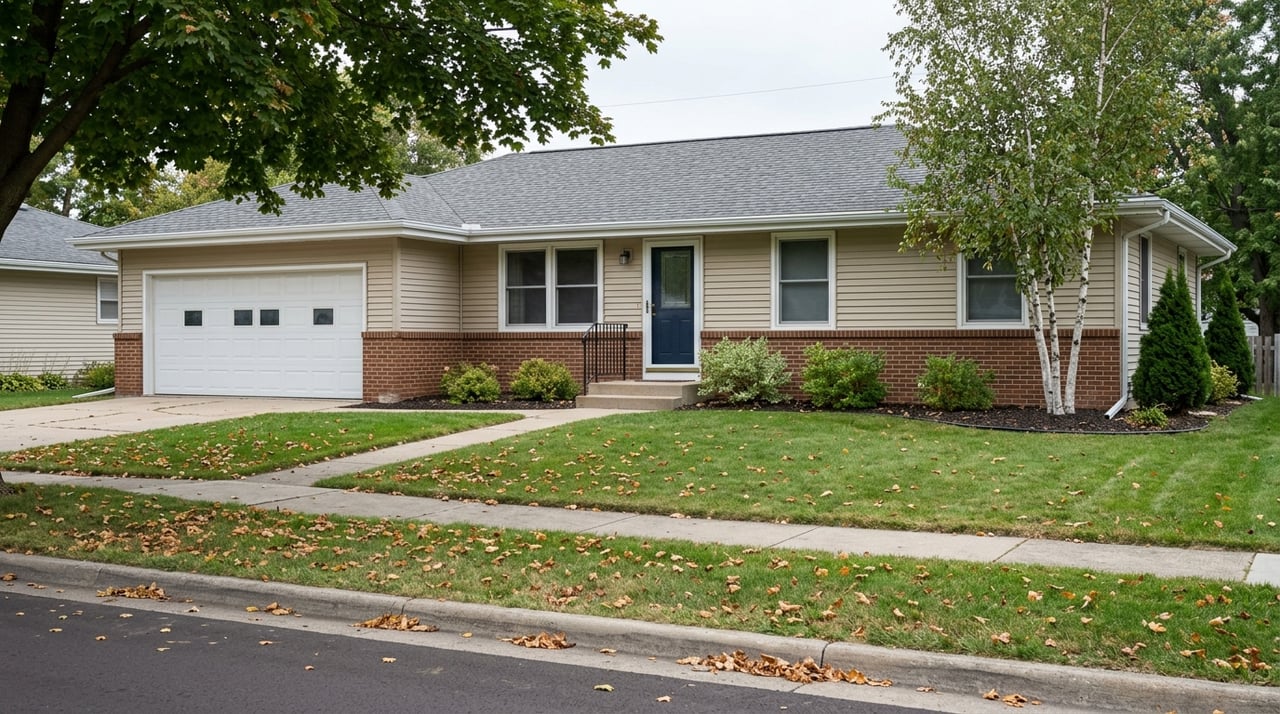
Housing here is mostly older and modest, with single-family homes and duplexes making up much of the neighborhood. There are some multi-unit properties as well, but the overall feel remains predominantly residential.
A big part of the appeal is how easy it is to get around. The neighborhood includes sidewalks, trails, bus routes, and access to places like Phoenix Park, the library, the post office, Banbury Place, Forest Street Park, and North River Fronts Neighborhood Park.
That park access matters if you want more than just a water view. North River Fronts Neighborhood Park includes open space, community gardens, a playground, a shelter, and a children’s garden, which adds to the day-to-day livability of the area.
Third Ward and Randall Park feel historic
If you are drawn to older homes and established blocks, Third Ward and Historic Randall Park are important areas to watch. These neighborhoods sit close to the river corridor, but their character leans more historic and residential than newly built or master planned.
City materials describe Third Ward as an older neighborhood between the Chippewa River and Putnam Creek and Park. Planning efforts there focus on maintaining neighborhood character and managing housing change over time.
Historic Randall Park has a low-density pattern of two-story one- and two-family structures. Many homes have been converted to rentals, and multifamily housing is more concentrated closer to the university and Water Street commercial area.
For buyers, this means charm often comes with age. These areas can offer mature streetscapes and a strong sense of place, but the housing stock may also require a closer look at condition, layout, and previous updates.
Downtown riverfront feels more urban
If you want the most urban version of riverfront living in Eau Claire, downtown is where that shows up most clearly. The city describes downtown as a mix of traditional commercial buildings and mixed-use spaces, with newer planning efforts designed to turn buildings and public spaces toward the river.
That shift includes more windows, balconies, plazas, and open space facing the water. In the North Barstow and Courthouse districts, city planning highlights riverfront parks, plazas, and paths lined with housing or offices.
This part of Eau Claire may be a good fit if you want to be near trails, restaurants, arts venues, and public gathering spaces. It is less about private waterfront seclusion and more about being close to an active, walkable city center with the river as a backdrop.
Trails shape everyday life
For many buyers, the biggest perk of living near the river is not the house itself. It is what you can do right outside your door.
The Chippewa River Trail runs 30 miles from downtown Eau Claire to Durand. Within Eau Claire, the city says the trail includes 11 miles of asphalt pavement and is free to use.
It also connects with the 14.5-mile Red Cedar Trail, creating a 37.5-mile system between Eau Claire and Menomonie. The Eau Claire City Trail connects with the Chippewa River State Trail at Short Street, which expands the regional biking network even further.
If you enjoy walking, running, biking, or simply being outside, that trail access can become part of your everyday routine. In many river-adjacent areas, recreation is not an occasional outing. It is built into the neighborhood experience.
Parks and public spaces add value
Eau Claire’s riverfront lifestyle is also shaped by its public spaces. Phoenix Park, Haymarket Plaza, Owen Park, Riverview Park, and Carson Park all help create a strong connection between the city and the water.
Haymarket Plaza was designed as a riverfront gathering space at the meeting point of the Chippewa and Eau Claire Rivers. It includes seating, art, lighting, and river-viewing features aimed toward the confluence.
The Riverwalk Trail adds another layer by connecting Lake Street in downtown Eau Claire to the Grand Avenue Pedestrian Bridge and extending to Haymarket Plaza. Together, these spaces make the riverfront feel active and accessible rather than hidden behind buildings or disconnected streets.
The city also points to downtown reinvestment, including Phoenix Park, lighted bridges, public art, and the Pablo Center for the Arts, as part of what has made the core feel more like a true riverfront district. If you value public spaces and a sense of place, that is a big part of the appeal.
River access includes boating too
Living near the river can also mean easier access to the water itself. The city maintains 10 boat dock and landing facilities on three bodies of water.
On the Chippewa River, access points include Forest Street Greenway, Riverview Park, Hobbs Landing, and Southwest Dog Park. Riverview Park also participates in a life-jacket loaner program, which reflects how active this corridor is for recreation.
If your ideal weekend includes paddling, boating, or spending more time on the water, those public access points can be a meaningful lifestyle benefit. Even if you do not own riverfront property directly, living nearby can still make water access easy.
Buyers should watch floodplain details
As attractive as riverfront living can be, there are practical details to keep in mind. Floodplain conditions are one of the most important.
The City of Eau Claire has participated in the National Flood Insurance Program since 1974 and operates a floodplain management program. The city also keeps Flood Insurance Rate Maps, Elevation Certificates, and map-amendment records for property owners and lenders.
In some river-adjacent areas, land along the riverbanks may be undevelopable or subject to floodplain restrictions. If you are considering a home near the water, it is smart to review those details early so you understand any limits, costs, or insurance implications tied to the property.
Parking can feel different downtown
Another difference between riverfront and suburban living in Eau Claire is parking. In downtown areas, curb parking works differently than many buyers expect.
The city says on-street parking downtown is generally limited to two hours between 6 a.m. and 6 p.m., free from 6 p.m. to 2 a.m., and prohibited from 2 a.m. to 6 a.m. Downtown also has two fully automated parking ramps.
If you want a walkable, urban environment, those rules may feel manageable. But if you are used to easy curb parking and multiple private spaces, this is worth factoring into your decision before you buy.
Older homes need a closer look
Because so much of Eau Claire’s river-adjacent housing is older, buyers should expect more variation from property to property. You may find smaller lots, older floor plans, and homes that have changed over time through additions or rental conversions.
The city’s planning framework also plays a role. Land-use and physical-development policies are guided through the Comprehensive Plan, Zoning Ordinance, and Subdivision Code, and properties near the rivers often come with more planning context than newer subdivisions farther out.
That does not make these homes less appealing. It simply means you benefit from a careful, property-specific review of use, condition, and location before moving forward.
Who riverfront living fits best
In Eau Claire, riverfront living tends to work best for buyers who want a blend of scenery and convenience. It can be a strong fit if you like older neighborhoods, easy trail access, nearby parks, and quick access to downtown services and public spaces.
It may be less ideal if your priority is a newer subdivision feel, easy parking, or a large, private waterfront lot. The lifestyle here is usually more about connection to the city and its natural setting than complete separation from it.
That is what makes Eau Claire’s riverfront distinctive. It offers a practical, lived-in version of waterfront life that feels local, accessible, and tied to how people actually move through the city every day.
If you are exploring river-adjacent homes in Eau Claire, the right guidance can help you weigh location, floodplain considerations, home condition, and long-term fit with confidence. When you are ready to talk through neighborhoods or start your search, connect with Courtney Kneifl for a personalized consultation.
FAQs
What does riverfront living in Eau Claire usually mean?
- Riverfront living in Eau Claire usually means a mix of older neighborhoods, river-adjacent housing, downtown mixed-use areas, trail access, and public parks rather than one continuous stretch of private waterfront homes.
Which Eau Claire neighborhoods are closest to the river?
- North River Fronts, Third Ward, Historic Randall Park, and parts of downtown near the North Barstow, Courthouse, and West Riverside areas are among the places most closely tied to Eau Claire’s riverfront setting.
What types of homes are common near the river in Eau Claire?
- Buyers near the river may find older single-family homes, duplexes, rental conversions, small multifamily properties, and some mixed-use or urban housing near downtown.
Are trails a big part of riverfront life in Eau Claire?
- Yes. The Chippewa River Trail, Riverwalk Trail, and other city trail connections are a major part of the lifestyle and make walking, biking, and outdoor recreation easier from many river-adjacent areas.
What should buyers know about floodplains near the Eau Claire riverfront?
- Buyers should review floodplain maps, elevation records, and any property-specific restrictions early, because some land near the riverbanks may be undevelopable or affected by floodplain rules.
How is downtown Eau Claire parking different for riverfront buyers?
- Downtown parking includes time-limited on-street spaces, overnight restrictions, and parking ramps, so buyers looking at river-adjacent downtown properties should understand how that compares with suburban parking expectations.